
3448 0 comments
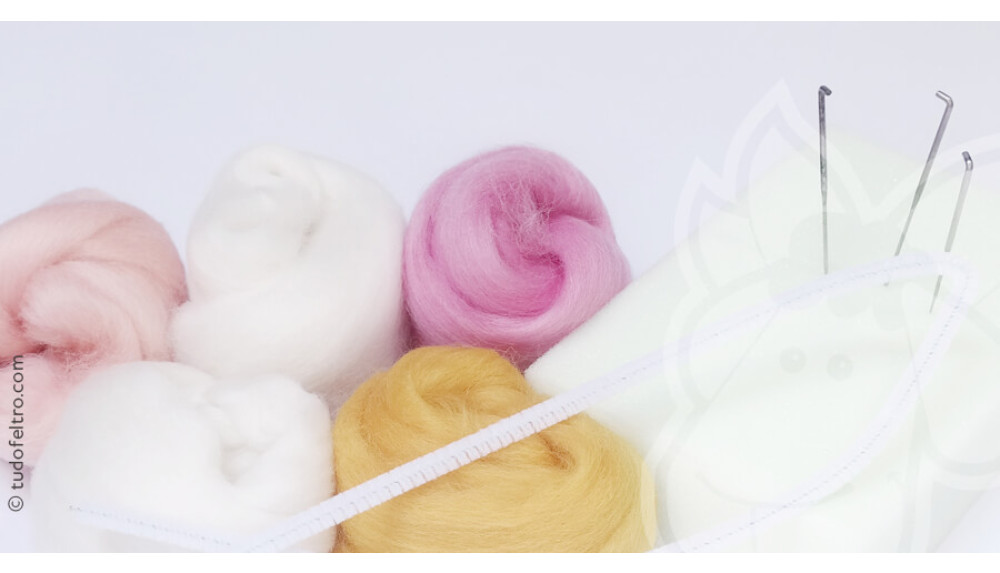
Are you looking at those wonderful wool creations and thinking it's magic? It truly is! Needle felting is an accessible, relaxing craft technique that allows you to transform simple wisps of wool into sculptures full of soul and charm.
If you feel like there's too much information and you don't know where to start, this is your guide. You will master the fundamentals to begin your journey into needle felting for beginners in a light and fun way. Get your needle ready!
The 3 Pillars: The Minimum Kit to Start
To start felting, you don't need more than three things. Keep it simple.
1. The Wool: The Magic Fiber
Wool is the heart of your project. We recommend having two types in your material box:
- Core Wool (Base): This is the wool you use to create the volume and internal structure of your piece. It felts quickly, is more economical, and since it won't be visible, it doesn't need to be the final color.
- Finishing Wool (Colors): Generally finer (like Merino Wool), this is the wool you apply to the outer layer to give it color and smooth details. It ensures that smooth, professional look.
2. The Needles: The Secret of Transformation
Felting needles are special: they have small barbs that hook onto the wool scales when you poke.
You will need at least two gauges:
- Coarse Needle (36 Gauge, for example): This is your "construction needle." Use it at the beginning to quickly compact large volumes of wool and set the initial shape.
- Fine Needle (40 Gauge, for example): This is your "detail needle." Perfect for finishing, smoothing the surface, and adding details like eyes and mouths.
3. The Working Mat: Your Protection Shield
Never, ever poke without a working mat! It protects your table and, more importantly, your legs or lap from pokes. The most common base is the High-Density Foam Mat, which must be firm enough so the needle doesn't fully penetrate it.
Quick Tip: If you don't want to gather the materials one by one, you can start with a Basic Felting Kit! They have everything you need for your first adventure.
Unveiling the Magic: The Compacting Process
Needle felting is an intertwining process. Every time you stab the wool with the needle, the barbs catch the fibers, push them inward, and cause them to lock together.
The secret lies in repetition and patience. Keep poking and turning your piece, and you will see the loose wool transform into something firm, solid, and moldable. Don't rush! Enjoy the process; it is incredibly therapeutic and relaxing.
The First Techniques You Must Master
Everything in needle felting starts with a basic shape.
The Perfect Sphere
The sphere is the foundation of almost everything (heads, bodies, fruits). Start by tightly rolling the core wool in your hands. Then, begin gently poking.
Golden Tip: Turn the sphere constantly. If you poke too long in one spot, you will create a flat area instead of a perfect circle.
The Secret to Firmness: Avoiding Floppiness
A well-made piece is one that is firm to the touch (like a hard sponge), not squishy. If your piece is floppy, it means it needs more poking. Concentrate the needle on the softer areas until the piece achieves a uniform density. You can test by pulling the fibers: if they don't come loose easily, it's just right.
Safety and Golden Tips
- Watch Your Fingers: The needle is sharp and using it is addictive! Try to keep your fingers away from the poking area. If you need to hold a very small piece, use pliers or tweezers.
- Poke Straight Down: To prevent needles from breaking (which happens when you bend them), always insert the needle vertically relative to the piece, and withdraw it along the same path.
- Less is More (at first): Start with less wool than you think you need. It is much easier to add wool than to remove it once compacted.
Bring Your Creativity to Life
These are your first steps to unlocking the charm of needle felting. Don't worry about perfection the first time; the most important thing is to enjoy the process and the magical feeling of transforming fibers.
If you want to see step-by-step projects and learn with ease, check out our Online Felting Courses!
What project will you choose for your first poke? Leave your idea in the comments and share your passion for wool!
Tags:needle feltingneedle felting for beginnershow to needle feltfelting materialsmagic woolfelting kitsfelting techniquesmerino wool
Related Products
-100x100.png)
Opportunity!

Latest


Related Article
The Importance of the Needle in the Felting Process
The technique of needle felting has its roots in the Industrial Revolution, when machines were devel..
Write a comment